
A novel by Thorsten Kuhlmann
Rubjerg Knude Fyr
The Lighthouse in the Sand
A place to visit today.
A place to call home then.
Meet the people behind Rubjerg Knude Lighthouse – on a coast where the sand never stands still.
Coming 16 November 2026 · English, Danish and German
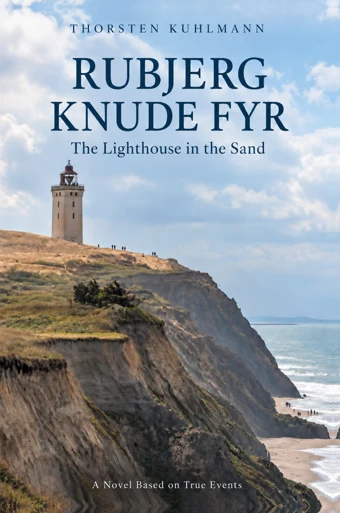
Photograph: Thorsten Kuhlmann · Original cover of the English edition
One lighthouse. One coast. Generations of lives.
You may know the view from the dune. But who lived beside the lighthouse? Who tended the light, raised children, kept a home together and watched the sand draw closer? This novel tells the story of a place through the people who called it home.
The lives behind the landmark
Beginning in 1891, the novel follows life at Rubjerg Knude and in the nearby village of Lønstrup through to 2026. Fishermen, lighthouse keepers and their families live with wind, sea and drifting sand. Across the generations, the landscape changes – and so does the world they call home.
A novel based on true events: Historical people and documented events appear alongside invented scenes, conversations and thoughts. The afterword explains the relationship between fact and fiction.
Read the opening
Chapter 1: The Bay of Lament
Lønstrup, November 1891
A continuous extract from the English edition of the novel.
The wind came from the west.
It mostly came from the west, here on this coast, where the land ended and the sea began. It had rolled across hundreds of kilometres of open water. When it reached the land, it smelled of salt and seaweed, of cold water and of things that had lain a long time beneath the surface.
Asger Eriksen stood in the doorway of his house and studied the sky. Behind him there was a rustle of cloth, then footsteps he knew as well as his own heartbeat. Ingeborg came with a cup in her hand.
Continue reading the extract
The house was low and whitewashed, with a thatched roof that crouched against the wind like an animal that had learned to make itself small. It stood not far from the edge of the dunes, where the grass began to give way to the sand, and its walls were thick, built of fieldstones that Asger’s grandfather Erik had gathered from the surrounding fields more than sixty years before.
Asger was thirty-eight years old, a fisherman since the age of fourteen, with broad shoulders and hands that ropes, nets and wet wood had shaped and made as hard as leather. His face looked older than his years, with dark eyes under heavy brows. He was not a man of words. What he had to say, he kept short. But he hummed. In the darkness before sunrise, while mending the nets, on the way home through the dunes, a deep, steady humming without words, tunes that nobody knew. Ingeborg claimed she could tell from the humming what kind of day it had been, long before he reached the door. Asger denied it. But he did not stop.
The sky that November morning in 1891 was a pale grey that promised nothing and threatened nothing. The wind was from the south-west, moderate, carrying the distant thunder of the surf that never quite fell silent on this coast.
A good day for fishing, as far as anyone could tell.
But on the North Sea you could never tell much.
People called this bay Jammerbugt. The Bay of Lament.
Ingeborg was thirty-six, two years younger than him, and they had been married for fifteen years. He had met her at the market in Hjørring, on a spring day. She had been the daughter of a farmer from inland, from a village where the sea was only a story. Three months later they had married in Mårup. During the ceremony Ingeborg had looked up at the little wooden ship that hung beneath the church ceiling. Asger had noticed and said nothing. Outside, the surf had murmured.
She wore her dark hair combed severely back. Her eyes were pale grey, sometimes almost blue, and gave away less than they took in.
She had learned to be a fisherman’s wife, although she had never expected to be one. Mending nets, gutting fish. And waiting, without knowing whether the men would come back.
“The sky looks calm,” she said.
Her voice was quiet, almost offhand. Asger heard the unasked question beneath it.
Will you come back?
“Yes,” said Asger. “A good day.”
He took the cup. The coffee was thin, more water than bean, because coffee was dear. Asger took a sip and looked into the cup.
“One day you’ll tell me what you do with the beans you won’t let near the water.”
“I’m saving them,” said Ingeborg. “For your funeral. There’ll be real coffee then.”
Asger drank. The coffee was hot, and for the hours on the water that counted for more than the taste.
“Erik’s still asleep,” said Ingeborg after a while.
The boy. Their son. Six years old, with his father’s dark eyes and his father’s broad hands, which still looked too big on him, as if borrowed. A sturdy child who was growing fast and ran down to the beach every morning to see the boats. Like almost every boy in Lønstrup, he wanted to be a fisherman.
“Let him sleep,” said Asger. “I’ll be back before he wakes.”
The floorboard behind the bedroom door gave him away.
Erik stood in the doorway, barefoot, in a white nightshirt that was too long for him, his hair tousled and his eyes still half caught in sleep. He had the talent all children have for waking up at exactly the moment you least want them to.
“Will you take me with you?”
“When you’re fourteen.”
“That’s eight more years.”
“Yes,” said Asger. “That’s the whole idea.”
Erik came closer across the cold floor and stood beside him in the doorway. He came up to his father’s elbow. Together they looked out at the grey light over the dunes, the big fisherman and the small one. For a while the silence was enough.
“On Sunday,” said Asger then, “I’ll show you the weaver’s knot. The proper one. Not what you made last week.”
“That was a knot.”
“That was an accident with two ends.”
Erik grinned. Then, without a pause: “Will you bring me a fish? A big one. As big as me.”
“As big as you,” said Asger. “At least.”
Thorsten Kuhlmann · Rubjerg Knude Fyr – The Lighthouse in the Sand · © 2026 Thorsten Kuhlmann.
Author and research
A question became a book.
When Thorsten Kuhlmann visited Rubjerg Knude Lighthouse in 2019, before it was moved, one question stayed with him: What was it like to live here with a family, children and animals, surrounded by sand and weather?
He searched archives, old newspapers, parish registers and census records. He wrote to descendants of the keepers and received replies. Memories, family stories and private photographs brought the names in the documents to life.
Thorsten has run Dänemark.Guide since 2024. Denmark is a second home to him and his family. Following Die Seehexe von Skagen, this is his second novel.
Find your edition
All editions are released on 16 November 2026.
English
Rubjerg Knude Fyr
The Lighthouse in the Sand
16.11.2026


- Paperback
- 978-3-695-74062-8
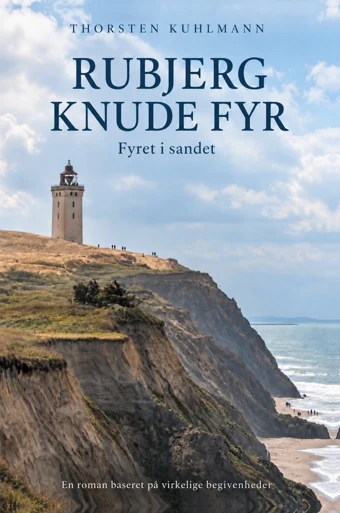
Danish
Rubjerg Knude Fyr
Fyret i sandet
16.11.2026
- Paperback
- 978-87-430-7454-0
- Hardcover
- 978-87-430-7511-0
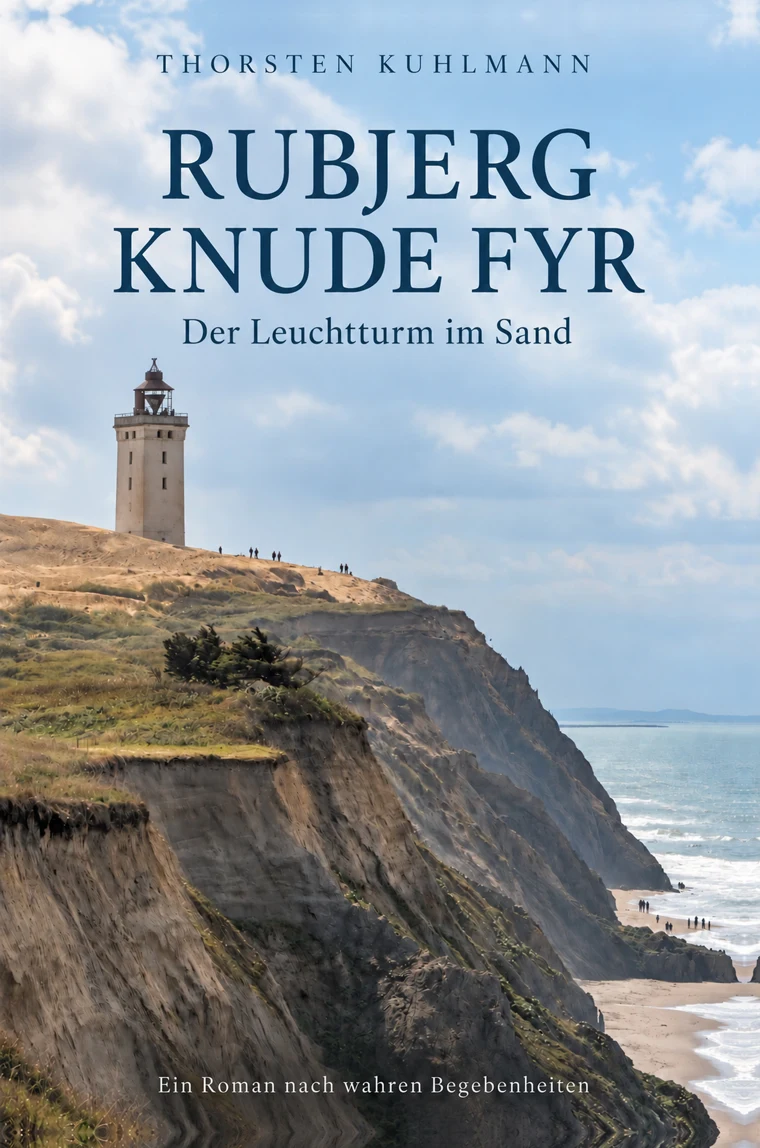
German
Rubjerg Knude Fyr
Der Leuchtturm im Sand
16.11.2026
- Paperback
- 978-3-6967-8921-3
- Hardcover
- 978-3-6967-7066-2
Links open Amazon in a new tab. As an Amazon Associate we earn from qualifying purchases. Current prices, pre-order options and availability are shown on the relevant Amazon page.
Thalia links are affiliate links.
Request a signed copy
Choose a language and edition. I’ll reply with availability, delivery time and the total including shipping. Your request is non-binding.
Questions about the book
Is this a novel or a history book?
It is a novel based on true events. Historical research provides the setting, while some characters, dialogue and scenes are invented. The afterword explains the boundary between fact and fiction.
Do I need to know Rubjerg Knude?
No. You can discover the place through the characters. If you have already visited the lighthouse, the story offers another perspective on a familiar landmark.
When will the book be published?
The English, Danish and German editions are due on 16 November 2026. Follow the link to your preferred edition for current purchase options.
Visit the places in the story
The travel guides linked below are in German.
On your next visit, you will see more than a tower.
You will know the people for whom this place was once the whole world.
Explore the book